
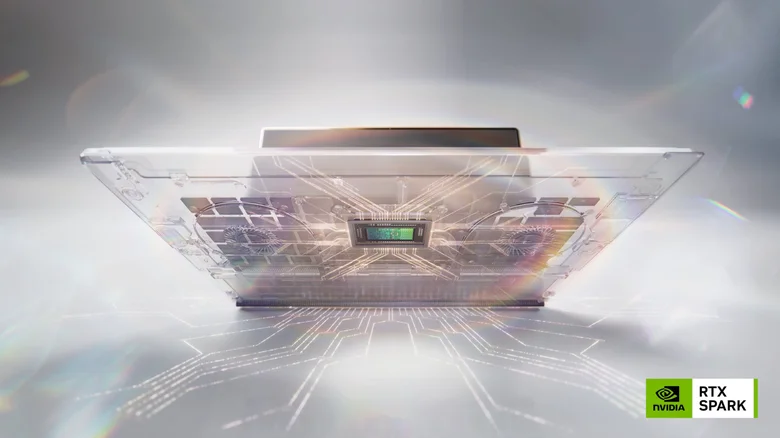

NVIDIA has just introduced the RTX Spark, a custom Arm-based “superchip” that aims to change the way we use Windows PCs. NVIDIA combines a 20-core Grace CPU with a powerful Blackwell-architecture GPU, moving away from the usual approach of using third-party processors with its graphics cards. For readers, this points to a move toward “agentic” computing, where machines can handle complex, independent tasks on their own instead of relying on the cloud.
Key Facts: The RTX Spark Superchip
| Feature | Details |
| Architecture | Arm-based SoC (Grace CPU + Blackwell GPU) |
| Process Node | 3nm (TSMC) |
| AI Performance | Up to 1 Petaflop (FP4) |
| Unified Memory | Up to 128GB LPDDR5X |
| Release Date | Fall 2026 |
| Monthly Fee? | No |
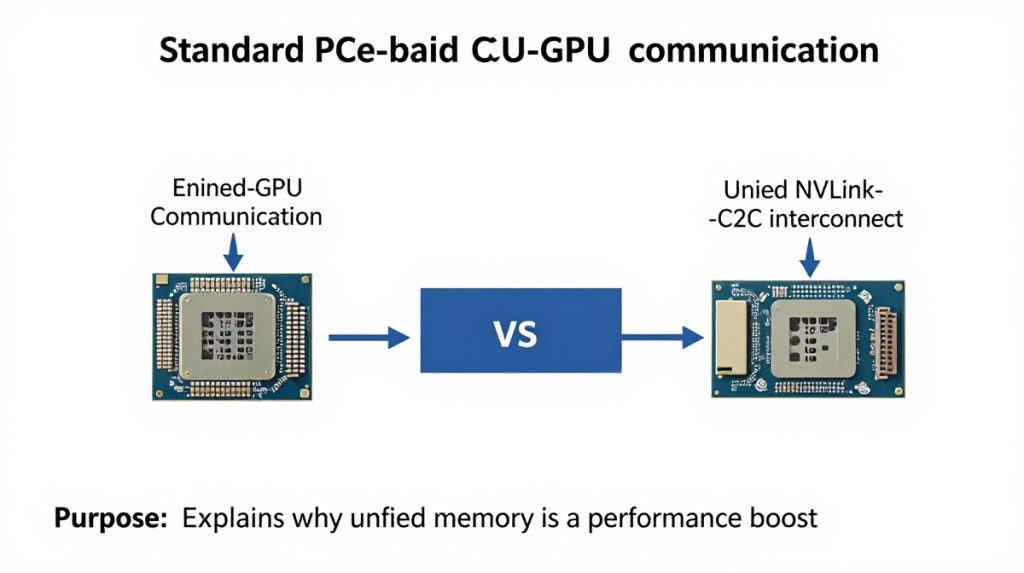
The RTX Spark is not just a discrete GPU; it is a System-on-a-Chip (SoC) that utilizes NVLink-C2C interconnects. In traditional PCs, the CPU and GPU must copy data back and forth through a bottleneck on the motherboard. The RTX Spark eliminates this by allowing both components to access a shared, coherent pool of up to 128GB of unified memory. This allows your laptop to run 120B-parameter Large Language Models (LLMs) entirely on-device, bypassing the privacy and latency issues inherent in cloud-based AI.
Technical performance analysis of NVIDIA’s RTX Spark: Expectations vs. Reality
GadgetOnHand hasn’t lab-tested these chips yet. Based on my 5+ years of testing Arm-based hardware, here is what real-world users should watch for before upgrading:
- The Emulation Factor: Because the RTX Spark runs on the Arm architecture, it relies on Microsoft’s Prism emulator to run legacy x86 Windows apps. While Prism has made great strides, users should watch for “stutter” in complex productivity software. If you use niche hardware—like professional-grade audio interfaces or legacy industrial tools—check for Arm-native driver support before making the jump.
- Thermal Efficiency in Ultra-Slim Laptops: NVIDIA says you can get “all-day battery life” in a 14mm laptop. From what I’ve seen, thin and light laptops usually throttle performance when running demanding tasks like 4K video editing or training AI models locally. Watch for professional reviews that mention “thermal saturation.” This tells you how long the chip can keep running at peak performance before the system has to cool it down.
Advantages and Technical Trade-offs
Pros:
- Data Privacy: By running 120B-parameter models locally, your sensitive documents never leave your physical device.
- Unified Memory Power: The 128GB memory pool is a massive boon for creators, allowing for heavy 12K video editing and massive 3D scene rendering that would typically require expensive workstation hardware.
Cons:
- Software Ecosystem Maturity: While Adobe is re-architecting its suite for Spark, the “long tail” of smaller Windows apps may not be optimized, leading to potential stability issues under emulation.
- Gaming Compatibility: Despite NVIDIA’s claims of 1440p AAA gaming at 100fps, the “Arm-on-Windows” gaming experience often struggles with anti-cheat software. This remains the biggest “wait and see” feature for PC gamers.
Who should skip this launch: –> This option is not a good fit for people who depend on important legacy software, developers who need a strictly x86-based Linux setup, or gamers who mostly play titles with kernel-level anti-cheat systems. If your work relies on certain peripheral drivers, the extra challenges of being an early adopter with this new architecture might not be worth it for you.
In conclusion, NVIDIA’s RTX Spark is the largest effort to date to unify the PC market around a unified “superchip” design. It delivers impressive computing power, but whether it succeeds depends on how smoothly Microsoft’s Prism emulation works. We suggest waiting for independent tests on heat and battery life this fall before deciding to pay the higher price for these new computers.