
NotebookLM, Google’s AI-powered research assistant, has gotten two big updates. Finally, the service has added the chat history feature that everyone has been waiting for. It also added a new premium level called AI Ultra, which lets you use it a lot more than before.
These changes make it easier for people to use the things they have researched. The chat history feature makes it easy to keep talking on different devices. The new subscription tier, on the other hand, is for people who need to use the platform more often. NotebookLM is still getting better at helping you find and organize your information.
NotebookLM’s new features and capabilities
All users on both web and mobile platforms can now use the chat history feature. This lets someone start a conversation about their sources on their laptop and then pick it up exactly where they left off on their phone.
Each entry in the chat clearly displays a date and time stamp. Users can delete past conversations with a simple menu option, and chats in a shared notebook remain private to each individual.
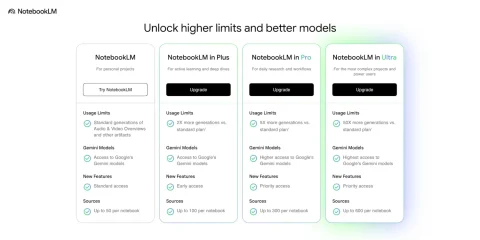
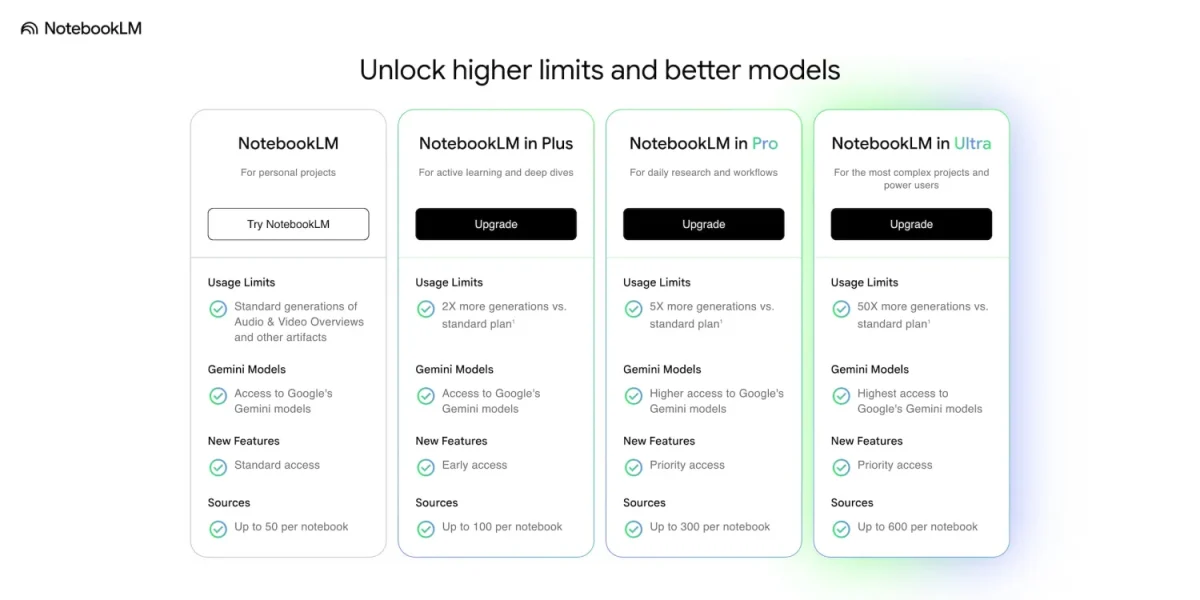
The new AI Ultra subscription tier gives power users a lot more features and capabilities. According to 9to5Google, this tier gives you about ten times the daily usage limits of the current AI Pro plan.
Subscribers can have 5,000 chats a day and more summaries, reports, quizzes, and research. It is marketed as the best option for professional and research workflows that need a lot of work.
The AI Ultra tier has more benefits than just more numbers. Users can now add up to 600 source documents to a single notebook, which is twice as many as before. A notebook can now support up to 1,000 users, which makes it easier for people to work together.
Some of the unique features are the ability to remove watermarks from graphics you make and access to the best Gemini AI models for tasks in NotebookLM.
In the end, these changes make NotebookLM a more useful and powerful program. The universal chat history makes it easier to use on multiple devices. The AI Ultra tier is for professionals, academics, and teams that need to handle a lot of data.
Together, they show a focused effort to meet the needs of a growing and diverse group of people who use this AI research tool.