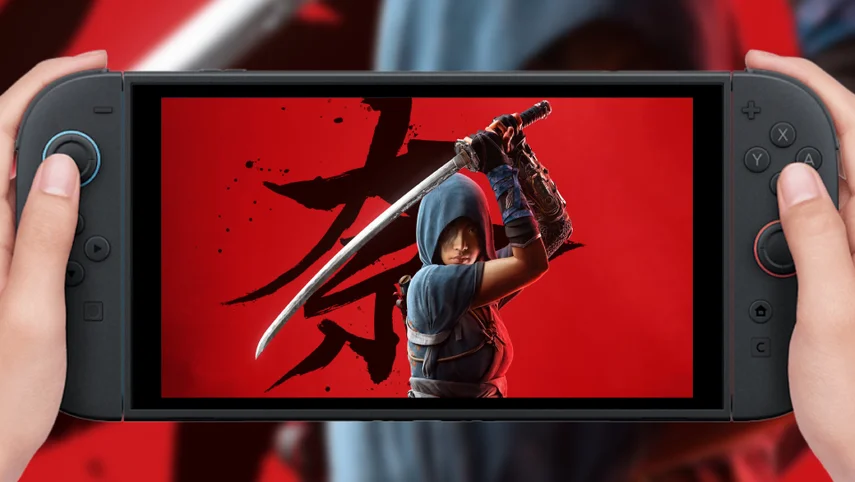

The Nintendo Switch 2 will get Assassin’s Creed Shadows on December 2. Fans of Nintendo won’t have to wait too long. This game brings the huge open world of feudal Japan to the newest Nintendo console. Players can play both Naoe’s and Yasuke’s stories while they’re on the go. Ubisoft recently gave a detailed look at the technical work that went into this ambitious port of the Nintendo Switch 2. The team had to solve some unique problems to make the game work well on the hybrid hardware.
Inside the ambitious Nintendo Switch 2 Port
Ubisoft’s developers had to put in a lot of work to make a current-gen Assassin’s Creed game work on the Nintendo Switch 2 port. The goal was to give players a realistic experience while still keeping the spirit of the game.

Bruno, the project’s lead programmer, said it was one of the “hardest but most rewarding” things he had ever done. The team had to come up with new ways to make games work and look good on the new platform.
This version includes all title updates released to date. Ubisoft Connect also lets you move between platforms. According to a report from Nintendo Life, the game lets players easily pick up where they left off on other platforms.
Performance and Technical Tweaks
The developers ensured that both docked and handheld modes maintained a stable 30 frames per second. You had to be very careful to reach this goal. A lot of work was done at the code level to improve the game’s structure. The team simplified the game assets and adjusted some technical details to ensure they worked consistently.
According to a deep dive on GoNintendo, things like Level of Detail (LOD) and draw distances were carefully changed. The Nintendo Switch 2 port has the same systems for simulating clouds and cloth as the other versions. But they were designed to work best with the console’s ARM processor. Some parts of the simulation data were reduced to reduce the GPU’s workload.
Ubisoft decided to use a baked global illumination system instead of ray-traced global illumination, even though the Switch 2 hardware can handle it. The main reason for this choice was RAM. The Xbox Series S and lower-end PC versions also use this same system.
Smart optimizations and Cutting-Edge tech
The team made some smart changes to keep the world feeling real and full. There is still a lot of detail about the environment. But there are fewer NPCs in busy areas to keep the game running smoothly.
This Nintendo Switch 2 port works thanks to a key technology called Deep Learning Super Sampling (DLSS). DLSS uses AI to make a picture clearer even though the internal resolution is lower. The result is more vibrant colors, more interesting textures, and fewer visual glitches. It also helps you do better and have less lag.
The developers also made a special change for Variable Refresh Rate (VRR). The team developed a specialized algorithm for VRR, which typically requires a higher frame rate to work. This keeps VRR on even when the game is running at 30 frames per second, which improves the experience.
Designed for Portable play
This Nintendo Switch 2 port focused a lot on the handheld experience. Because handheld mode is more limited by GPU power, the team adjusted image quality and LOD settings to maintain performance.
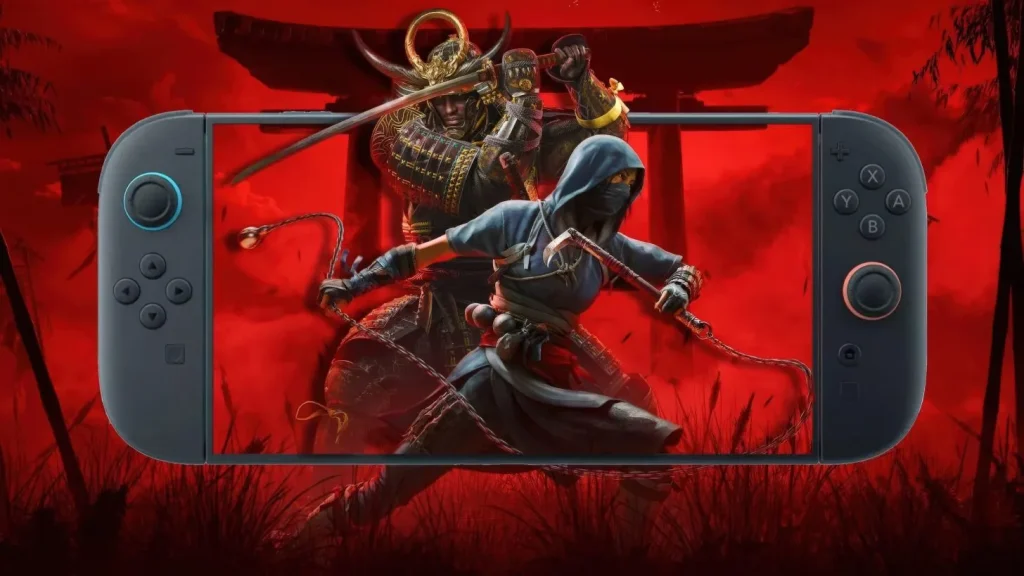
The portable screen supports both HDR and VRR, which makes colors brighter and the screen feel smoother. You can also move around in the game by touching the screen. This makes it simpler to use the hideout, maps, and menus. There will be more updates in the future, including performance improvements. People are also working on making it possible to play docked with a keyboard and mouse.
In conclusion, Ubisoft is very committed to the Nintendo Switch 2 platform, as seen by the port of Assassin’s Creed: Shadows. It shows a whole new way that Nintendo handhelds can play AAA games.