
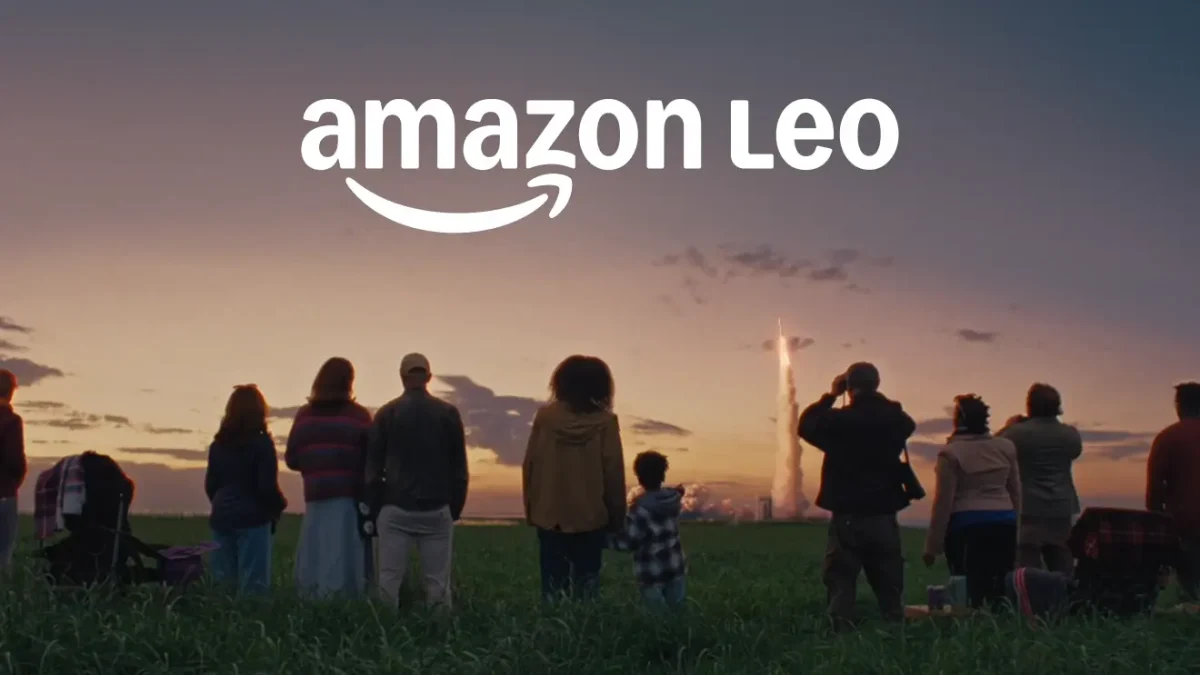

Amazon has officially put “Project Kuiper” to rest and announced that the permanent name for its satellite internet business will be Amazon Leo. The new name is a direct reference to the low Earth orbit where the satellite constellation will be. The change means that the project is moving from the research and development stage to the beginning of commercial service.
The Kuiper Belt, a ring of asteroids in the outer solar system, gave the original name for Project Kuiper. The company is now dropping its internal codename after seven years of work. The new name, Amazon Leo, gives the service a clear and customer-facing identity.

Space is where Amazon Leo will connect in the future.
Amazon is building a large network of satellites that will give people around the world access to high-speed internet. There will be more than 3,200 satellites in the planned Amazon Leo constellation. There are already more than 150 satellites in space right now. The company is working with commercial launch companies like Blue Origin and SpaceX to send hundreds more into orbit.
This significant project aims to bridge the digital gap. The Amazon Leo network aims to provide fast, reliable broadband access to billions of people who currently lack it. It will also help businesses, governments, and groups working in remote areas with poor internet connections.
The service will meet various needs with three customer terminals. The compact Leo Nano can reach up to 100 Mbps, the mid-sized Leo Pro can reach up to 400 Mbps, and the powerful Leo Ultra is designed to reach up to 1 Gbps. These terminals will connect people on the ground to the Amazon Leo satellites that are flying above them.
Amazon has already signed up several well-known partners for its new service. Companies like JetBlue, DIRECTV Latin America, and NBN Co. in Australia have agreed to use the connectivity. The business plans to start serving some business clients before the end of 2025. As the constellation grows, more customers will be able to use the Amazon Leo service in 2026.
With this new name and progress, Amazon Leo is now a strong competitor in the satellite internet market, challenging SpaceX’s Starlink, the current market leader.