

The YouTube Apple Vision Pro app launch marks the end of a two-year wait for headset owners who previously had to rely on Safari for their viewing needs. YouTube has finally released a dedicated visionOS application, marking a move away from its initial web-only strategy. The app is now available for download on both M2- and M5-based devices through the visionOS App Store.
What is the reason for the launch of the YouTube Apple Vision Pro app?
YouTube didn’t release a separate app for Apple’s spatial computer when it first launched in early 2024. The company told users to use the Safari browser to get to the content instead. This workaround had some big problems. The headset wasn’t very useful for flights or commutes because you couldn’t download anything offline. Playback controls were also less smooth than those of native streaming apps.

Third-party developers attempted to fill the gap. According to a report from 9to5Mac, an app called Juno briefly offered a tailored YouTube experience on visionOS before Apple removed it for violating YouTube’s Terms of Service. That removal underscored the demand for an official solution—a demand that YouTube has now addressed with this release.
The timing of the YouTube Apple Vision Pro app launch is interesting. Since the headset launched, most major streaming services, including Disney+, Amazon Prime Video, and Peacock, have had native visionOS experiences. YouTube may have been hesitant because it wasn’t sure how long people would use the platform.
The Financial Times cites recent IDC data showing shipments in the fourth quarter were about 45,000 units, a big drop from earlier quarters. Reports say that production has stopped because demand wasn’t as strong as expected. YouTube went ahead with the launch anyway, suggesting the company now thinks it has enough users and engagement to cover the costs of development.
Key features of the YouTube Apple Vision Pro app
The native app brings a host of improvements that the web version couldn’t quite manage. These additions bring the YouTube experience in line with what users anticipate from other top-tier streaming apps available on the platform. Benefits for users include:
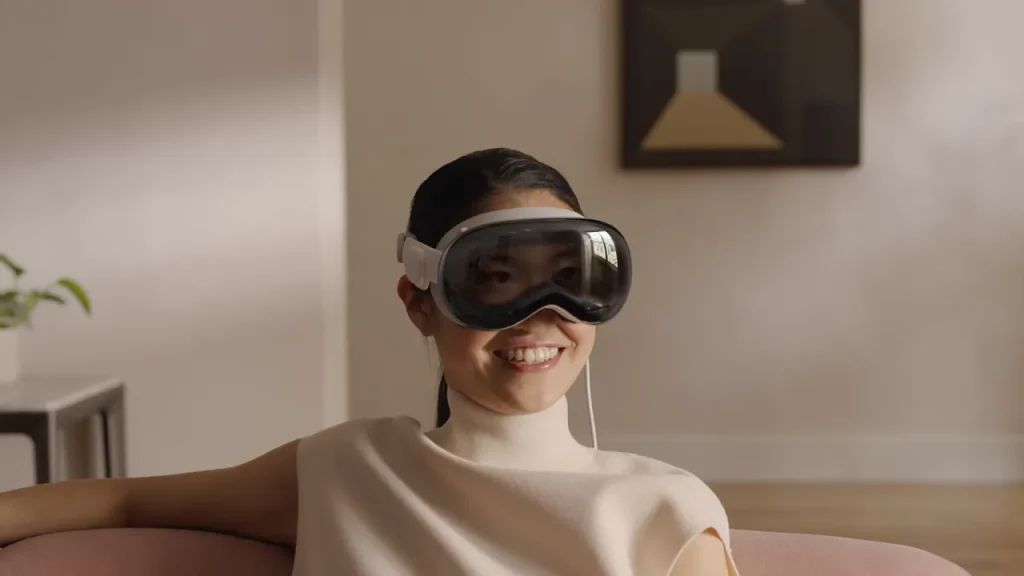
- Theater-sized virtual display: Videos play on a large, adjustable screen in fully immersive settings.
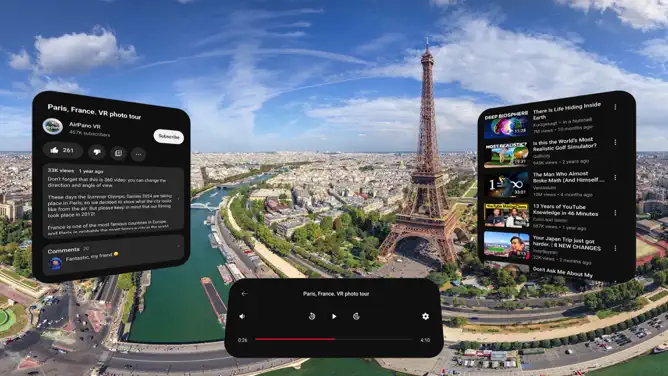
- Finding spatial content: A special Spatial tab makes it easy for users to find 3D, VR180, and 360-degree videos.
- 8K playback support: This is only available on newer Apple Vision Pro models that have the M5 chip.
- Gesture-based controls: You don’t need a controller to resize the video window, scrub through timelines, or move through menus.
- YouTube Shorts support: You can fully browse vertical short-form content.
- Offline downloads: The native app lets you save content for later viewing, unlike the Safari version.
These updates immediately address the issues with the browser-based method. Incorporating spatial video formats is particularly beneficial for headset users, as it leverages the device’s superior display capabilities. The introduction of the YouTube Apple Vision Pro app launch brings the platform’s complete library to the device, offering an experience tailored to spatial computing.
Q: Is the Apple Vision Pro app for YouTube free?
Yes. You can download the app for free from the VisionOS App Store.
Q: What Apple Vision Pro models work with this?
The app works on both the older M2-based Vision Pro and the newer M5 chip models.
Q: Can I see 8K videos on my Vision Pro?
The headset needs an M5 chip to play 8K video. M2 models will play content at lower resolutions.
Q: Does the app work with YouTube Music or YouTube TV?
The current release is mostly about regular YouTube videos and Shorts. There have been no announcements about separate apps for YouTube TV and Music.
Q: How do I control playback without a remote?
The app uses gesture controls that are built into visionOS. To choose, pinch; to change size, drag; and to scrub through videos, swipe.
Q: What happened to Juno?
Someone else created Juno, a YouTube client for visionOS. The Verge reports that Apple removed the app from the App Store after YouTube complained that it violated the rules.
In conclusion, the YouTube Apple Vision Pro app launch transforms the headset from a device that could play YouTube videos into one that is purpose-built for them. After two years of relying on Safari and third-party workarounds, users finally have access to offline downloads, spatial content, and fluid gesture controls. The future of video on visionOS will depend on continued investment from platforms like YouTube—and with this release, that investment has clearly begun.