
Meta has introduced Muse Spark, a new AI reasoning model designed to improve the Meta AI assistant in all its apps. Created by Meta Superintelligence Labs, this model will help the assistant perform better in math, science, health, and daily planning. Muse Spark launches on Meta AI app and meta.ai, marking its debut before expanding to WhatsApp, Instagram, Facebook, Messenger, and Meta’s smart glasses in the coming weeks, according to Engadget.
Muse Spark differs from Meta’s earlier open-source Llama models because it is a closed system built from the ground up over 9 months. According to the company, the model uses a new architecture and data pipelines, which help it run efficiently and use less than one-tenth of the computing power needed by Llama 4 Maverick. While these changes make the system more efficient, performance tests show mixed results. Muse Spark does better than Claude 4.6 Opus, Gemini 3.1 Pro, and GPT 5.4 on HealthBench Hard, but it does not perform as well as these models on broader reasoning tests like GPQA Diamond and ARC AGI 2.
Key features and capabilities of Muse Spark for creative work
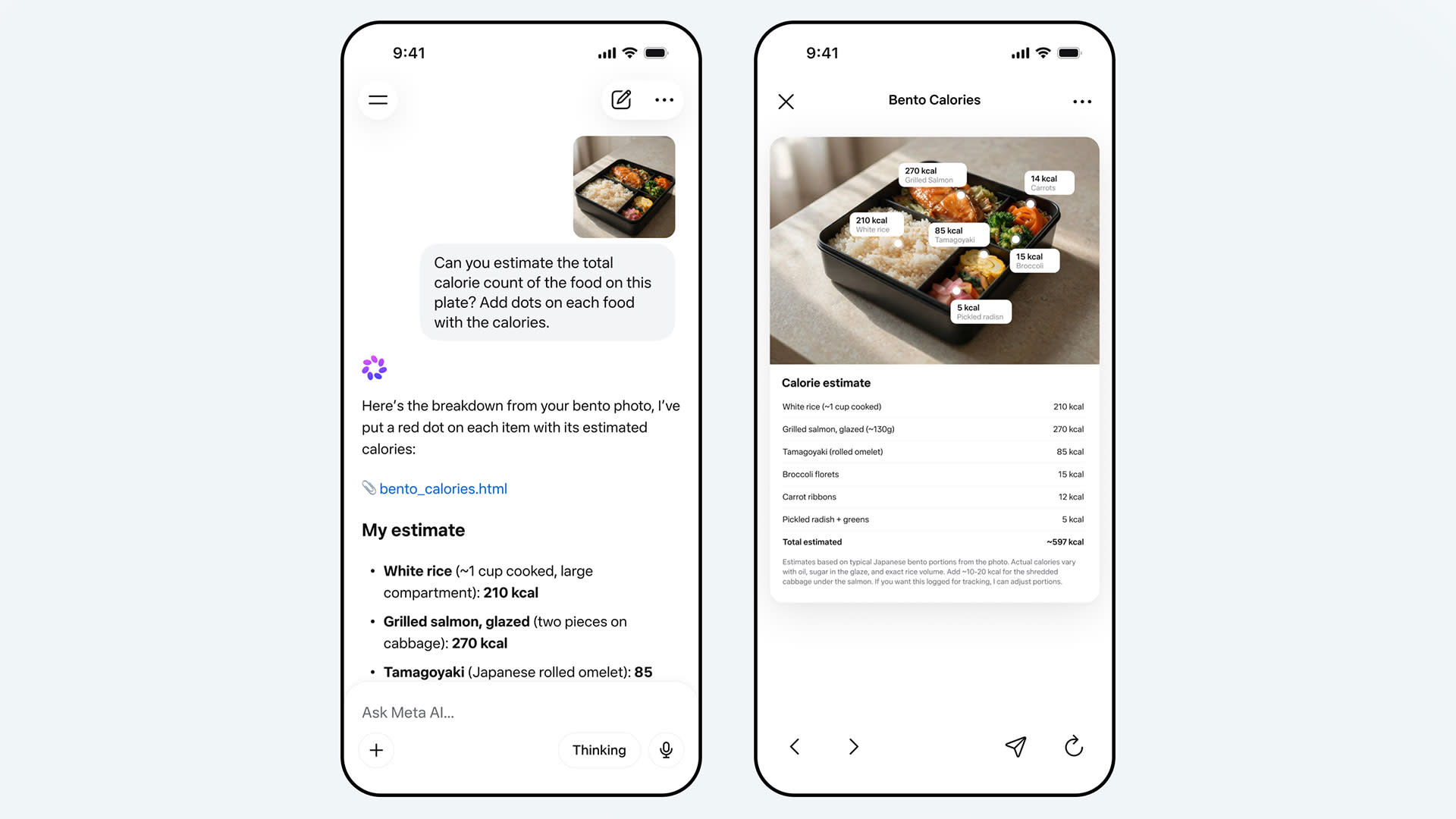
Muse Spark gives you two ways to get answers: “Instant” mode responds quickly, while “Thinking” mode explains each step. Soon, a new “Contemplating” mode will let several AI agents work together on complex tasks. The model can also handle images, video, audio, and text. For example, you can take a photo of a grocery shelf and ask Muse Spark to rank items by protein content or estimate calories.
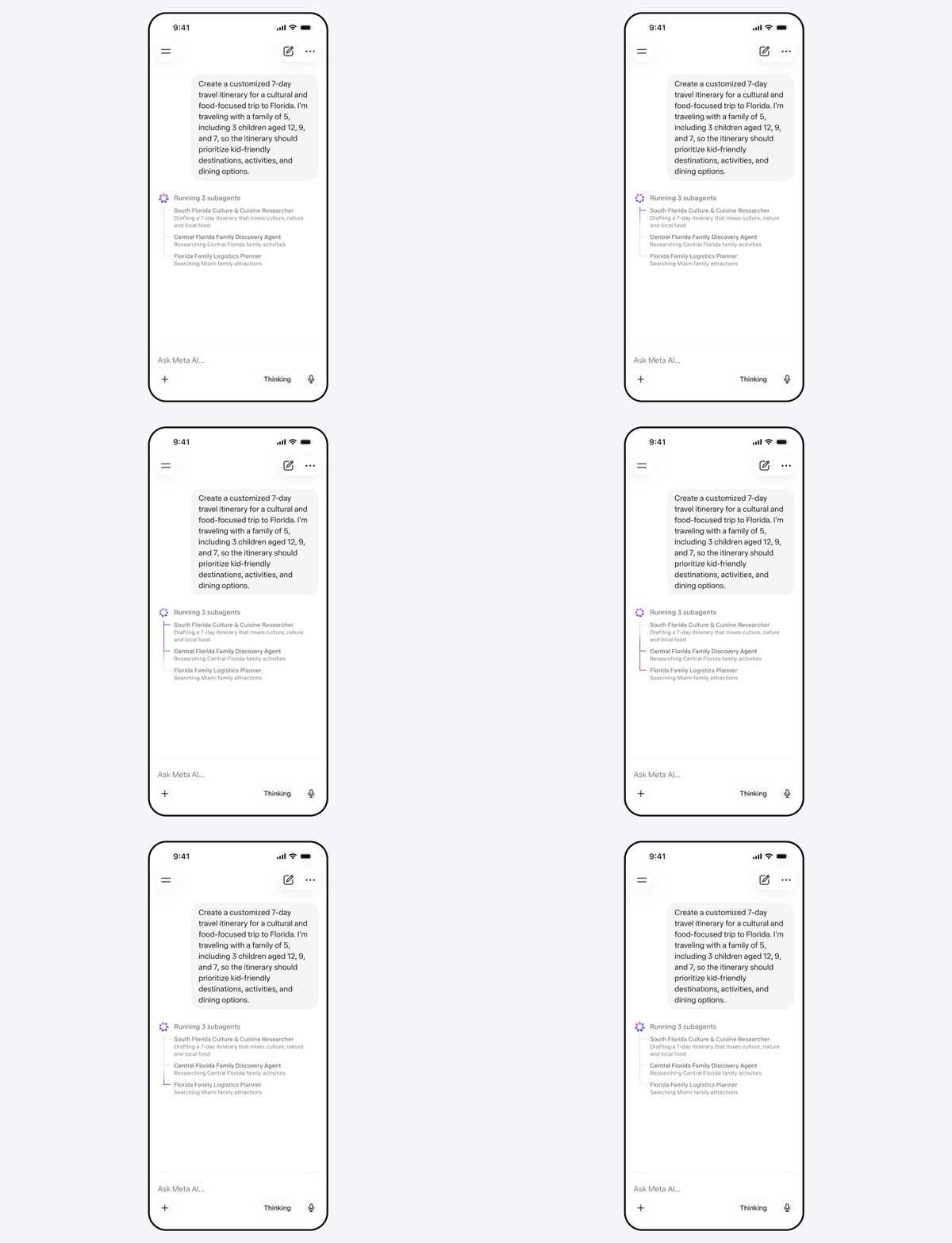
Muse Spark manages multiple sub-agents concurrently. For example, when you organize a trip, one sub-agent assembles your itinerary, another evaluates destinations, and a third recommends activities. In addition, its shopping assistant compares products and delivers direct purchase links.
Health queries consistently rank among the top reasons people seek out AI assistants, Meta reports. To address this, the company partnered with more than 1,000 physicians and created a clinical training dataset for Muse Spark. The model now delivers more detailed answers to health questions, including those involving medical images or charts.
Looking ahead, Meta plans to release more capable versions of Muse Spark as part of its new Muse series, and the company has stated it “hopes to open source future versions of the model.” For now, Muse Spark is available starting in the United States, with a global rollout to follow.
In conclusion, Muse Spark is Meta’s first closed-reasoning model designed for everyday users. It works faster, uses resources more efficiently, and is now part of Meta AI.